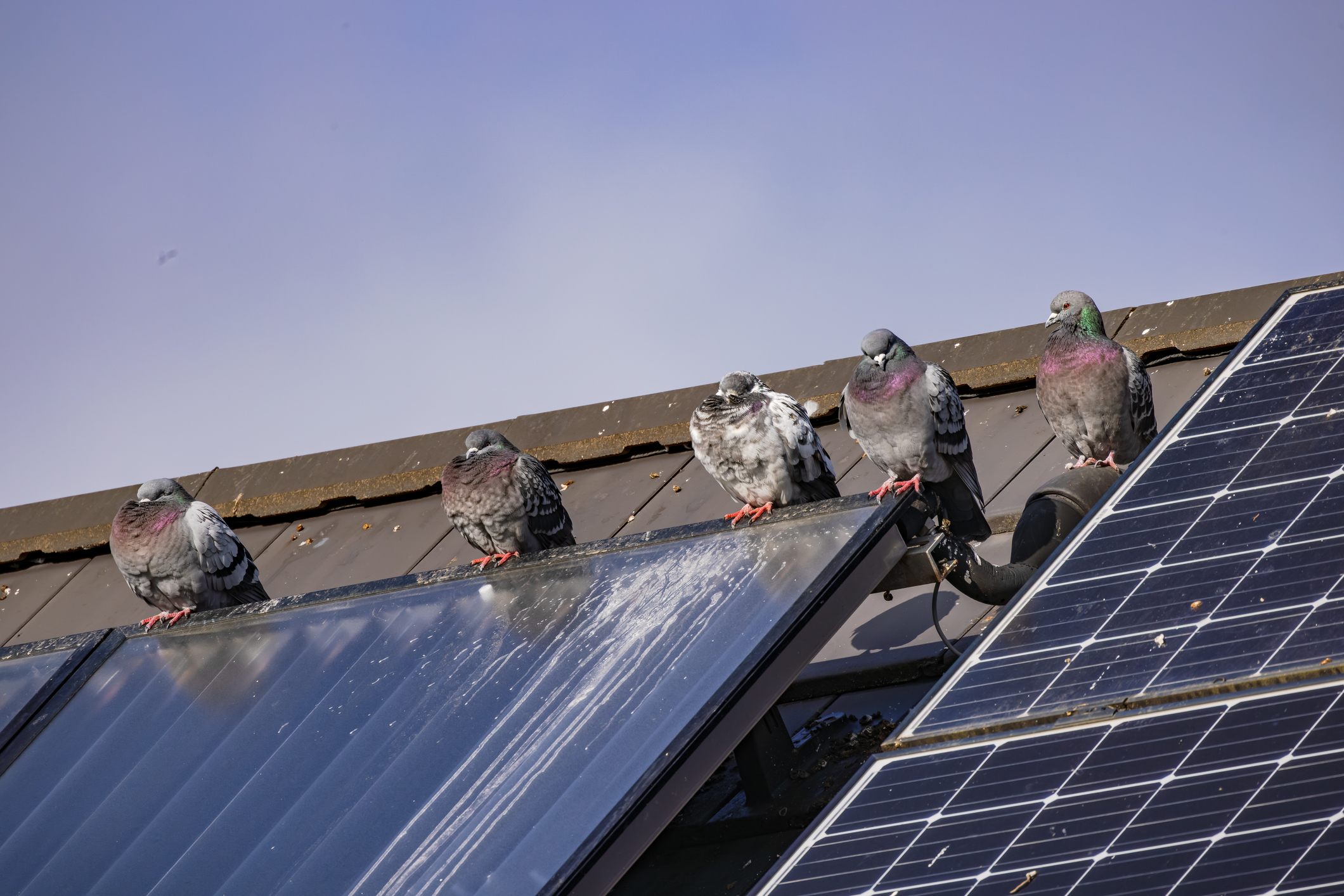
Commercial buildings can provide birds with many of the same things they seek in natural environments: food, water, shelter, warmth, and protected places to rest or nest. Rooftops, ledges, signs, loading docks, warehouses, and mechanical equipment can all create attractive locations for nuisance birds.
Once birds find a property that meets their needs, they may continue returning to it. This can turn occasional bird activity into an ongoing problem involving nesting materials, droppings, noise, blocked areas, or birds entering the building itself.
At Bird Control Services, we help commercial, industrial, and institutional property owners identify what is attracting nuisance birds and develop control strategies based on the species, property, and type of activity occurring.
TL;DR: What Attracts Birds to Buildings
- Buildings can provide protected places for birds to perch, roost, and nest.
- Food and waste areas may encourage recurring bird activity.
- Rooftops, ledges, signs, and overhangs can provide convenient resting areas.
- Openings in a building may give birds access to sheltered interior spaces.
- Different bird species are attracted to different property features.
- Identifying what attracts the birds is an important part of long-term control.
Why Do Birds Like Building Ledges and Roofs?
Many commercial buildings contain elevated surfaces that provide birds with convenient places to rest and observe their surroundings.
Ledges, parapets, signs, rooflines, and other architectural features can provide stable perching locations. Rooftops may also offer areas that are relatively protected from activity at ground level.
Once birds become comfortable using these areas, the same locations may be used repeatedly for perching or roosting.
Can Food and Waste Attract Birds?
Accessible food is one of the most common reasons birds gather around commercial properties.
Dumpsters, outdoor eating areas, loading docks, food-processing areas, and improperly contained waste can provide reliable food sources. Even relatively small amounts of food can encourage birds to remain near a property.
Improving waste management can help make the site less attractive, although established bird activity may require additional control measures.
Why Do Birds Nest on Commercial Buildings?
Buildings can contain protected spaces that resemble natural nesting locations.
Overhangs, roof structures, signs, beams, equipment, and recessed areas can provide shelter from weather and predators. Some birds may also enter warehouses, garages, loading areas, or other structures through openings in the building.
Once nesting activity begins, removing the attraction may be more complicated than simply discouraging birds from perching.
Why Choose Bird Control Services?
At Bird Control Services, we specialize in professional bird management for commercial, industrial, institutional, military, and religious properties.
With more than 30 years of experience, we understand that successful bird control starts with identifying the species, its behavior, and the features attracting it to the property. Our solutions include bird exclusion, structural netting, anti-roosting systems, bird spikes, shock tracks, wire deterrents, cleanup and sanitation, and other specialized methods.
We develop solutions based on the specific bird problem and property rather than relying on a one-size-fits-all approach. Contact us today to get started.
Frequently Asked Questions
What types of birds commonly cause problems around buildings?
Pigeons, sparrows, starlings, gulls, and vultures are among the nuisance bird species that can create problems around commercial and institutional properties.
Does removing food stop birds from returning?
Reducing available food can make a property less attractive, but established birds may continue returning for shelter, nesting, or roosting opportunities.
Can birds be attracted to a clean building?
Yes. Even without an obvious food source, a building may provide desirable ledges, rooftops, shelter, warmth, nesting locations, or protection from predators.